
Throne Into Chaos
by Michael Egel, General & Artistic Director
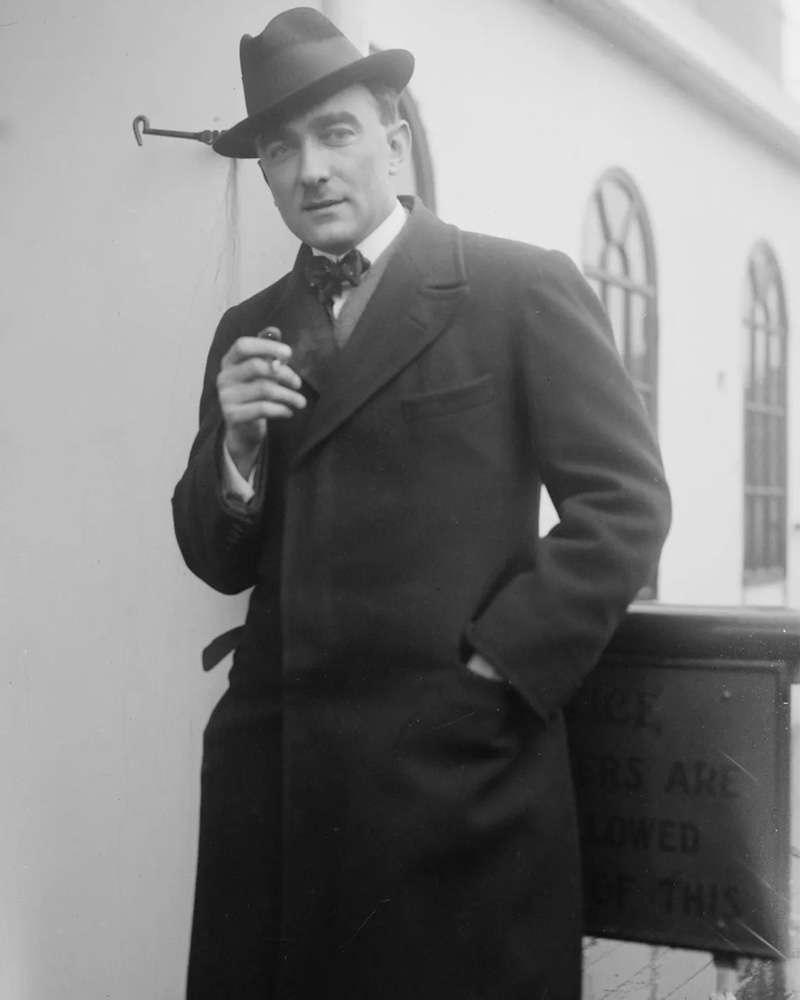
Exactly 100 years ago, one of opera's most unique and enigmatic masterpieces had its debut in Warsaw, Poland.
Polish composer Karol Szymanowski feels like a man who stepped out of a film or novel: born into wealth, brilliantly educated, impeccably stylish—and deeply restless. He was an artist searching for something he couldn’t quite name. And when he traveled to Sicily and North Africa in 1908, he found a world that changed him: vivid, sensual and alive in ways that Northern Europe simply wasn’t. It was a place where Greek, Roman, Byzantine, Norman and Islamic cultures and artistic traditions didn’t just coexist—they blended, clashed, and sparked.
That energy is everywhere in King Roger. The opera begins in Palermo’s Cappella Palatina, a dazzling melding of Byzantine and Islamic design, and ends in a wide open ancient Greek theatre. From the very start, the opera presents a world of striking contrasts—East and West, sacred and sensual, order and abandon. But King Roger isn’t really about Sicily—or even about the historical King Roger II. At its core, it’s an inward story. Roger himself is less like a historical figure and more like a reflection of Szymanowski: a man caught between competing impulses, trying to reconcile intellect with desire, order with freedom. His court—known historically as a place of cultural openness—is seen and heard here in the opera as an idealized space, where conflicting ideas might coexist, even if they can’t fully be resolved.
The opera invites multiple interpretations. Some might see it as a story of marital rupture; others observe a tale of temptation, or even of a ruler confronting the fragility of his authority. It can also be seen as something more abstract and more unsettling: a struggle between ways of being. Running through all of these is a deeper tension: the pull between reason and ecstasy, structure and surrender. It’s not a quiet conflict—it’s volatile, disruptive, and transformative.
Szymanowski’s process of creation only intensified that sense of instability. He revised the opera extensively, sometimes at the expense of clarity, as his librettist Jarosław Iwaszkiewicz worried. But the opera’s shifting, dreamlike quality feels true to its period. Written just after World War I, King Roger reflects a fractured cultural moment in time, when certainty had given way to ambiguity, and artists of all genres were left searching for new ways to find and give meaning in their work. King Roger premiered in Warsaw in 1926—100 years ago to the date.
The result is an opera that moves less like a traditional opera narrative and more like a vision—lush, elusive, and emotionally charged. Szymanowski described Roger’s journey as “a search for hidden meanings, an attempt to solve unsolvable mysteries.”
That sense of searching is at the heart of the piece. That’s the journey audiences will take at this opera. Not toward a clearcut answer—King Roger doesn’t offer easy answers—but into a world where beauty, conflict, and transformation are inseparable.